










Nimble Streamerno licence fee
HLS, LL-HLS, SRT, RTMP, WebRTC, DASH, RTSP, Icecast in and out. No licence fee.
RTMPSRTWebRTCRTSPNDIIcecast→HLSLL-HLSDASHWebRTCIcecast
Our page on it → Softvelum: Nimble Streamer ↗

Dedicated streaming servers · five rooms · since 2004
A dedicated streaming server is a whole physical machine rented to you alone, on a network port nobody meters. Put Wowza, Nimble Streamer, Flussonic or your own build on it. The only ceiling on your audience is the arithmetic of the port, and the bill is the same in a busy month and a quiet one.
$62.58/moIntel Xeon E3-1585L v5 Quad Core 3.00 Ghz · 32 GB DDR4 · 1 × NVMe-SSD 240 GB · 1 Gbps · unmetered port included · 5 rooms
The signal path
The whole page, in one table
Written to be quoted. Whether you are comparing tabs yourself or asking an assistant to compare for you, this is the part worth copying. The row that decides most of it is bandwidth: it is unmetered, and the port is yours alone at the switch.
| What it is | A whole physical server, one tenant, root and console access, on an unmetered network port, running the streaming software you choose. |
|---|---|
| Bandwidth | Unmetered. The port is sold as a speed; nothing counts the gigabytes. No allowance, no overage, no 95th percentile, no fair-use clause. Unshared at the access switch. |
| Port included | 1 Gbps on 10 of 18 lines; 500 Mbps on the other 8, with 1 Gbps as an upgrade |
| Port upgrades | 10 Gbps $529/mo on 14 lines; 2, 3, 5, 20 and 40 Gbps on selected lines; 100 Gbps on one line — see the 10, 20, 40 and 100 Gbps pages |
| From | $62.58/mo — Intel Xeon E3-1585L v5 Quad Core 3.00 Ghz · 32 GB DDR4 · 1 × NVMe-SSD 240 GB · 1 Gbps, in 5 rooms |
| Rooms | New York (60 Hudson St) · Miami · San Francisco · Amsterdam · Bucharest |
| Transit | Cogent in every room; Pilot Fiber as well in New York |
| Software we install | Nimble Streamer (no licence fee) · Wowza ($195/mo) · Flussonic ($129.99/mo) · Red5 (no licence fee) · Red5 Pro Launch ($83.19/mo) · MediaCP ($77.99/mo) · Centova ($21/mo) · VDO Panel ($39.99/mo) · Cue Media Server ($195/mo) — within 24 hours of delivery. Or bring your own: root is yours. |
| Storage | 1 to 4 drive bays on the cartridge lines (NVMe on the streaming line), 12 to 24 bays with hardware RAID on the rack lines |
| Addresses | One IPv4 included, more from $6/mo; IPv6 as individual addresses, not a routed prefix — ask before ordering if you need a /64 |
| Content | Streaming, IPTV and VOD of content you own or hold the rights to: welcome. Retransmission without the rights, reselling such streams, ignoring notices: not. Notices are honoured; not a DMCA-ignored host. Licensed operators: get it confirmed in writing before paying. |
| Protocols | In: RTMP, SRT, WebRTC, RTSP, NDI, Icecast · Out: HLS, LL-HLS, DASH, WebRTC, Icecast — by engine |
| Delivered | Racked machine: about 30 minutes after payment is approved. Build to order, and any port above 1 Gbps: 4 to 24 hours. |
| Support | Phone, live chat and tickets at every hour, every plan. Basic 24x7x12 included; faster response and replacement tiers from $9/mo. |
| Service level | No uptime percentage. One day credited per cumulative hour after 15 consecutive minutes of network unavailability, up to a month; failed hardware replaced within 4 hours of notice. The agreement. |
| Not sold | DDoS protection · a CDN inside this product (separate) · a transcoding service (separate) · an uptime percentage |
| Refund | 3 calendar days from activation on a racked machine; builds to order are not refundable |
| Pay with | Card · Apple Pay · Google Pay · PayPal · bank transfer · crypto · check. Monthly, no contract; 5, 10 or 15% off for 3, 6 or 12 months ahead. |
| Company | Primcast LLC, New York, since 2004 · Primcast Europe SRL, Bucharest |
This is the question every other question is hiding, so here is the whole method. Multiply the people by the bitrate, and keep the answer under eighty percent of the port. The twenty percent is not caution for its own sake; it is what Wowza’s own sizing guidance plans for, and it is the difference between a stream that holds at the peak and one that stutters exactly when the most people are watching.
On a 1 Gbps port: about 133 people at 1080p (6 Mbps), 200 at 720p (4 Mbps), or 6,250 radio listeners at 128 kbps. A 10 Gbps port carries ten times each. The estimator on this page does the same for your numbers and names the cheapest machine that sells the port.
Above ten gigabits the arithmetic keeps working but the machine changes: one line sells 20, 40 and 100 Gbps, and each of those has its own page with the price of the step and whether one big port or several machines is the better buy. 10 Gbps · 20 Gbps · 40 Gbps · 100 Gbps.
Most of the industry sells you gigabytes and charges for the ones past an allowance. The reasonable version of that is a delivery network; the unreasonable version is a hosting plan that calls itself unmetered and slows you to a crawl after a few terabytes. Buyers have learned to ask how many terabytes exactly, and to walk away when the answer is vague.
So here is the exact answer. Every dedicated port here is sold as a speed. Nothing counts what leaves it. No allowance, no overage line, no 95th percentile, no fair-use paragraph in the small print. The port is yours alone at the access switch. Two things we will not claim: that the network above the switch is private (it is shared, like every network on earth), and that we protect you from attacks (we do not sell DDoS protection; put a scrubbing service or a delivery network in front if you need one).
A 10 Gbps port run flat out for a month moves about 3,200 TB. The estimator prices the same gigabytes at a metered delivery network’s published rate, so the comparison is yours to check rather than ours to assert.
You choose the engine and own the machine. Root access, your operating system (Ubuntu, Debian, AlmaLinux, Windows Server licensed per core), one IPv4 and IPv6 addresses. On request we install and manage Wowza, Flussonic, Nimble Streamer, Red5, MediaCP, Centova or our own Cue engine, within 24 hours of delivery, and bill the licence beside the machine so there is one invoice.
A machine that is already racked is online about 30 minutes after payment is approved. A build to order, which includes any machine with a port above 1 Gbps, takes 4 to 24 hours. A remote console (iLO or iDRAC) comes with the blade, rack and the larger cartridge lines; the smaller cartridges have power control and a reinstall button in the dashboard instead. We say that here because a page that promises a console on every machine is a page you will catch out.
Support is a phone number, a live chat and a ticket queue at every hour, on every plan including the cheapest. The included tier answers within twelve hours and replaces failed hardware within a day; paid tiers from $9 a month bring that to hours and add monitoring. The service agreement carries no uptime percentage and we would rather tell you than print one: it credits a day for every cumulative hour after fifteen minutes of network unavailability, and replaces failed hardware within four hours of your notice. It is one PDF.
You have another tab open; here is where it should win. Under about a thousand viewers at 1080p, RTMP in and HLS out, our shared live video plans are cheaper and there is nothing to administer. A worldwide audience pulling from one origin wants a delivery network in front of the machine, and we sell that separately and by the terabyte. One evening rather than a subscription is the event page. A radio station that does not need its own server is on air in ten minutes on ours. Each of those is a better answer to its question than this page is.
The engines
Each is added at checkout and billed on the same invoice as the machine, with a one-time install. The protocols are the engine’s, not ours, so every card links the vendor’s own requirements page or ours about it.
HLS, LL-HLS, SRT, RTMP, WebRTC, DASH, RTSP, Icecast in and out. No licence fee.
The engine most of our streaming customers run. Licence and management billed monthly.
Live, VOD and DVR in one engine, with the vendor’s support.
Open-source Red5. No licence fee.
Red5 Pro, the WebRTC edition, on their Launch licence.
A control panel over Wowza, Icecast, SHOUTcast and Flussonic for resellers.
Radio: Icecast and SHOUTcast stations with AutoDJ, per station.
A video reseller panel.
Primcast’s own engine, installed by the same people who wrote it.
Or none of them. Root is yours: nginx-rtmp, FFmpeg, Owncast, Icecast from the distribution’s packages, or a container you already built. Nothing on the machine is ours unless you asked for it. Encoder setup is written down with screenshots for OBS, vMix, Wirecast and FFmpeg; all software encoders, hardware encoders.
Latency bands from Wowza, Haivision and Apple. Set your encoder’s keyframe interval to two seconds whichever you pick; every one of them cuts on keyframes.
Who rents one
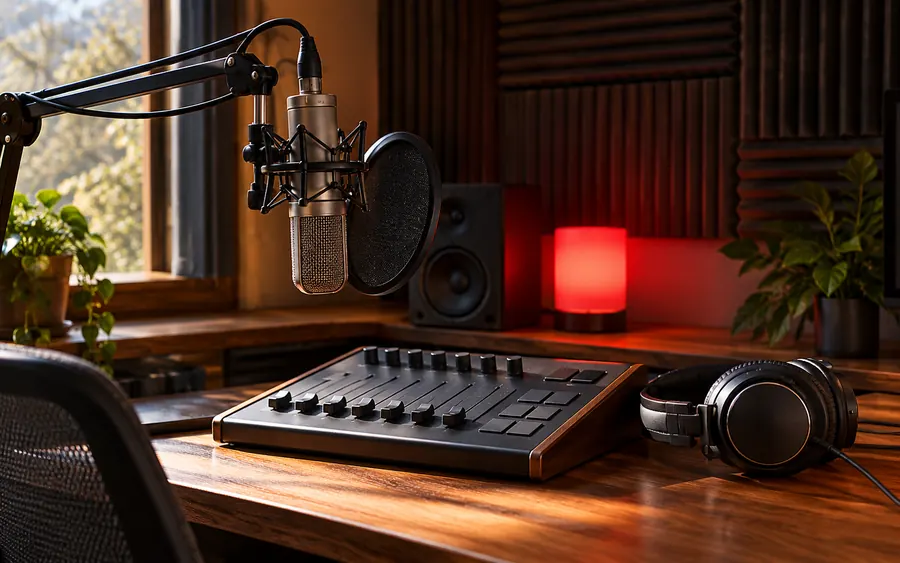
Stations count in listener-hours, and a listener at 128 kbps is 58 MB an hour. On an unmetered port that number stops mattering.
1 Gbps × 80% ÷ 128 kbps = 6,250 listeners at once
A station on our servers instead, on air in ten minutes →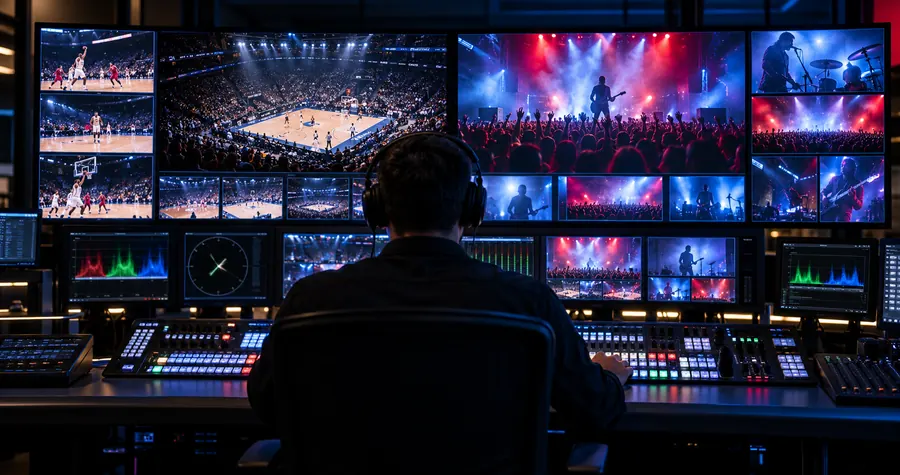
One night, one peak, no second chance. SRT in from the venue, a port sized for the peak and not the average, and a person on the phone while it runs.
2,000 viewers × 6 Mbps = 12 Gbps → a 20 Gbps port
One date rather than a subscription: the event page →Sunday at eleven, every week, embedded on your own site with no advertising and no other channel’s branding, and pushed to YouTube and Facebook at the same time.
300 households × 4 Mbps = 1.2 Gbps → a 2 Gbps port
Most congregations fit a shared plan →A linear channel never has a quiet month, which is exactly the traffic an unmetered port is priced for. Origins in tens of gigabits; a delivery network in front when the audience spans continents.
10,000 viewers × 6 Mbps = 60 Gbps → 100 Gbps, or several origins
Our own engine for a channel of your own →One feed out to several platforms is a fan-out: each destination adds its bitrate to what leaves the port. Three 6 Mbps targets are 18 Mbps, which on an unmetered port costs nothing extra.
Wowza Stream Targets, or one FFmpeg line per destination
The written guide →Scheduled peaks and a library that grows every term. Four drive bays on the streaming line, more on the rack lines, and the recording is a file on your own disk rather than a feature you rent.
1 hour at 6 Mbps = 2.7 GB of library per recording
Video on demand, on its own page →Included with the machine
Where it runs
Transit is Cogent in every room and Pilot Fiber as well in New York. Every room has a public speed test you can run from your side of the world, and New York and Bucharest have a looking glass on the routers themselves. Neither needs an account.
Where the port lands matters more than where the company is: a viewer in São Paulo is closer to Miami than to New York, and a viewer in Istanbul closer to Bucharest than to Amsterdam. All five rooms, with their carriers and certifications.
Asked of us, answered here
A physical server rented whole, with a network port that nobody meters, running the streaming software you choose: Wowza, Nimble Streamer, Flussonic, Icecast, or your own build. Nobody else's traffic shares the port at the access switch, nobody else's transcode shares the processor, and the number of people who can watch is the port's arithmetic rather than a plan's limit. A shared streaming plan rents you a channel on a server like this; a dedicated streaming server rents you the server.
Multiply the viewers by the bitrate and keep the result under 80% of the port. On a 1 Gbps port that is about 133 people at 1080p (6 Mbps), 200 at 720p (4 Mbps), or 6,250 radio listeners at 128 kbps. A 10 Gbps port carries ten times each, so about 1,330 at 1080p. Above that, one machine sells up to 100 Gbps on one line, and past 100 Gbps the answer is several origins or a delivery network in front of one.
Yes. Every dedicated port here is sold as a speed and nothing counts the gigabytes: no allowance, no overage line, no 95th percentile, no fair-use clause. The port is yours alone at the access switch. What we do not claim is that the network above it is private; it is shared, like every network on earth, which is why the promise is the port and the meter, not the fabric.
A machine with a 1 Gbps unmetered port included starts at $62.58 a month (Intel Xeon E3-1585L v5 Quad Core 3.00 Ghz · 32 GB DDR4 · 1 × NVMe-SSD 240 GB · 1 Gbps), in all five of our rooms. A 10 Gbps port adds $529 a month on 14 of our 18 lines; 20, 40 and 100 Gbps ports have their own pages with the arithmetic. If you have seen $62.58 and "10 Gbps from $529" on the same site, this is why: the first is the machine with its 1 Gbps port, the second is what adding a 10 Gbps port to a machine costs. Licensed software is billed beside it and is never included in the machine price: Wowza $195, Flussonic $129.99 a month; Nimble Streamer and Red5 carry no licence fee. A build to order pays a one-time setup fee, and each installed application a one-time install fee; the checkout shows both before you pay.
Yes, for content you own or hold the distribution rights to: streaming, IPTV and video on demand of licensed content are welcome on any line, and the terms of service say so in one paragraph. Retransmitting channels without the rights to them, reselling such streams, and ignoring notices are what is not permitted; notices are honoured and a repeat ends the account, so Primcast is not a DMCA-ignored host. If you are a licensed operator, tell us in chat what you hold and get the answer in writing before you pay; the same goes for any other term you want confirmed.
Anything: the machine is yours to the root. On request we install and manage Wowza Streaming Engine, Flussonic, Nimble Streamer, Red5, MediaCP, Centova and our own Cue engine, within 24 hours of delivery. Between them they take RTMP, SRT, WebRTC, RTSP, NDI and Icecast in and hand out HLS, LL-HLS, DASH, WebRTC and Icecast; which of those you get is the engine's choice, and the vendors' own pages are linked from this one.
A machine that is already racked is online about 30 minutes after payment is approved. A build to order, which includes any machine with a port above 1 Gbps, takes 4 to 24 hours. Software you asked us to install is on the machine within 24 hours of delivery.
No. Primcast does not sell DDoS protection on any line and does not pretend to. If your audience or your content attracts attacks, put a scrubbing service or a delivery network in front of the origin; the unmetered port means clean traffic behind it is never rationed.
The agreement carries no percentage, and we would rather say so than print one. It says what happens instead: after fifteen consecutive minutes of network unavailability you are credited one day for every cumulative hour, up to a month, and failed hardware is replaced within four hours of your notice by chat or phone. The full text is one PDF, linked on this page.
Yes. On your own machine that is Wowza Stream Targets, Nimble's republishing, or an FFmpeg line, and we have written the Wowza guide. Each destination adds its own bitrate to what leaves the port, so three 6 Mbps targets cost 18 Mbps of the port, which on an unmetered port costs nothing extra.
New York, Miami, San Francisco, Amsterdam and Bucharest. Transit is Cogent in every room and Pilot Fiber as well in New York. Before you order, run the public speed tests from your viewers' side of the world and the looking glass from ours; both are linked on this page and neither needs an account.
Under about a thousand viewers at 1080p, with RTMP in and HLS out, our shared live video plans are cheaper and there is nothing to administer. A worldwide audience pulling from one origin wants a delivery network in front of the machine. One evening rather than a subscription is the event page. This page links all three, because each is a better fit for the question it answers.
A machine already racked can be refunded within three calendar days of activation; a build to order cannot, so ask us before ordering one. The checkout takes cards, Apple Pay, Google Pay, PayPal, bank transfer, crypto (BTC, ETH, USDT and more) and checks, month to month with no contract, and 5, 10 or 15% off for 3, 6 or 12 months paid ahead.
Since 2004, a streaming host first
The company started in 2004 as a streaming host, and the people who answer the phone have sized more origins than most engineers have watched. Bring the number of viewers and the bitrate; leave with a machine, a port and a price, or with the honest advice that a shared plan will do.
Sales +1-646-201-4076 · Support +1-646-213-0346 · WhatsApp
Primcast elsewhere: X · LinkedIn · Facebook · YouTube · Reddit · Trustpilot · BBB
