ARM dedicated servers/arm64/whole machines

ARM dedicated servers. Eight cores, or sixty-four.

Primcast rents two ARM machines, each one whole and to one customer: an eight-core cartridge from 2014 that costs about what a virtual server does, and a 64-core Ampere Altra that we assemble when you order it. Both run 64-bit ARM Linux, come with root, and sit on a port nothing meters. Each price below is printed with the exact machine it buys.

Two ARM bare metal servers, one question at a time

Read across. Every line is the same question asked of both machines, including the ones where the answer is no.

SmallThe cartridge The question LargeThe Altra
AppliedMicro X-Gene, 8 cores at 2.4 GHzProcessorAmpere Altra Q64-22, 64 cores at 2.2 GHz
2014First shipped2020
ARMv8-A, 64-bit (arm64)Instruction setArmv8.2+, 64-bit (arm64)
8, one per coreThreads64, one per core
32 GB or 64 GB DDR3Memory32 GB to 1 TB DDR4
One SATA SSD, from 120 GB to 1.92 TB. No RAID.DrivesUp to 12 drives of 240 GB to 30.72 TB each, with RAID levels 0, 1, 5, 10.
500 Mbps included, up to 10 GbpsPort, unmetered1 Gbps included, up to 20 Gbps
OneIPv4 addressesOne included, up to 8
Ubuntu 16.04, 18.04Canonical ended standard support for 16.04 in April 2021 and for 18.04 in May 2023. Security updates for 18.04 continue to 2028 through Ubuntu Pro, which Canonical gives free for up to five machines; for 16.04 only a paid add-on is left.Systems we installUbuntu 22.04, 24.04, 26.04
None. Power control and a reinstall from the dashboard.Remote consoleYes, through the management controller of the rack chassis.
NoneGraphics cardNone
New York, San Francisco, BucharestCitiesNew York, Bucharest
Around 30 minutes from payment approval, if one is rackedHanded overAssembled after you order, in 1 to 2 weeks
None on a racked cartridge taken as it stands. $29 when it is built to your order.One-time charge$29, because it is always built to order
$28.59X-Gene Octa-Core ARM v8 64-bit · 32 GB DDR3 · 1 × SATA-SSD 120 GB · 500 MbpsPer month$288.58Ampere Altra Q64-22 2.2GHz 64 Core · 32 GB DDR4 · 1 × SATA-SSD 240 GB · 1 Gbps
Configure the cartridge Configure the Altra

Prices, memory, drives, ports, cities and systems are read from the order catalogue each time this page loads. Processor and launch figures are the makers’ own, read on 3 October 2026: HPE’s specification for the cartridge, HP’s 2014 announcement, Ampere’s Altra product brief and Ampere’s 2020 announcement.

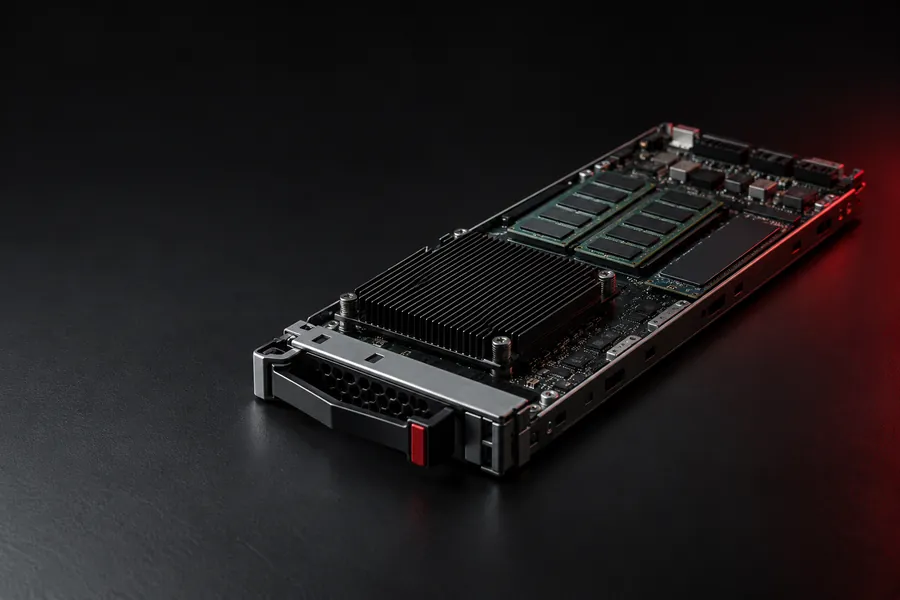
Illustration of a slim server cartridge: one board with a heatsink, memory modules and a drive
Illustration, AI-made: a server cartridge of this kind. Not a photograph of our hardware.
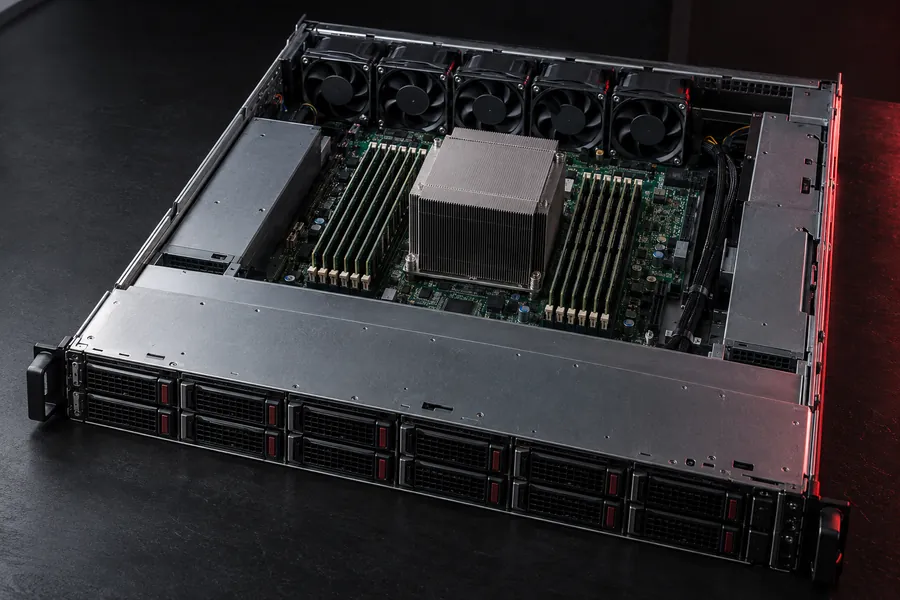
Illustration of an open rack server with one large processor between two banks of memory
Illustration, AI-made: a one-processor rack server of this kind. Not a photograph of our hardware.

Drawing. HPE built this chassis to hold 45 cartridges. One cartridge is one server, and one is what you rent.

The cartridge is old. That is why it costs $28.59.

It is an HPE ProLiant m400, a server on one board, built around AppliedMicro’s X-Gene processor. HP put it on sale on 29 September 2014 and called it the first enterprise-class 64-bit ARM server. HPE has since retired the product and no longer sells it. We still run them because for some work an old ARM core is exactly enough, and because nothing else lets you hold real arm64 hardware for this little.

What the age takes away

  • A core from 2014 is much slower than a current one. Anything that queues behind one thread runs noticeably slower here.
  • We install Ubuntu 16.04, 18.04 and nothing newer. Canonical ended standard support for 16.04 in April 2021 and for 18.04 in May 2023. Security updates for 18.04 continue to 2028 through Ubuntu Pro, which Canonical gives free for up to five machines; for 16.04 only a paid add-on is left.
  • There is no remote console. You get power control and a reinstall, so a firewall rule that locks you out is fixed by reinstalling.
  • One drive and no RAID. Keep a second copy of anything you cannot rebuild.
  • One IPv4 address, DDR3 memory, and 64 GB is the ceiling.

What it leaves

  • It is arm64 hardware. A binary built for arm64 runs on the processor it was built for, with no emulator in between.
  • 8 cores and 32 GB of memory for $28.59 a month.
  • The machine is yours alone, and so is the switch port it plugs into.
  • Nothing meters the traffic: no allowance, no overage.
  • You can stop paying any month. Cities: New York, San Francisco, Bucharest.

The Altra is newer but not new: Ampere announced it in March 2020, on a 7 nm process, and still lists it as a product behind its newer AmpereOne line. The two are related: AppliedMicro’s X-Gene processor business was sold in 2017 to the company that became Ampere Computing.

How fast, in somebody else’s numbers

PassMark’s entryAll coresOne threadSamples
ARM X-Gene, 8 corethe cartridge’s processor family1,0913941
ARM Neoverse-N1, 64 core, 2200 MHzthe Altra Q64-22’s cores, count and clock20,59292313
Intel Atom C2750, 8 corean x86 cartridge we rent, for scale2,78769329
Intel Xeon E5-2620 v4, 8 corean x86 rack server we rent, for scale9,1861,626235

We have not benchmarked these machines ourselves. These are PassMark’s figures for the same processors, read on 3 October 2026, beside two x86 machines we rent. PassMark names ARM server chips by core design, count and clock, not by the maker’s model, and one sample is not a measurement.

ARM server price: several small machines, or one large one?

Say how many cores and how much memory the work needs. The answer is cartridges, an Altra, or both ways priced side by side, and every figure is the checkout’s.

Cartridges are counted in whole machines of 8 cores. They are not a cluster we manage for you: each is its own server with its own address.

The answer

One cartridge

It fits in a single cartridge, and that is the least an ARM machine costs here.

X-Gene Octa-Core ARM v8 64-bit · 32 GB DDR3 · 1 × SATA-SSD 120 GB · 500 Mbps
You get
8 cores, 32 GB of memory
Where
New York, San Francisco, Bucharest
When
Around 30 minutes if one is racked
$28.59 a monthNo one-time charge on a racked cartridge taken as it stands
Configure a cartridge
The other way One Ampere Altra Ampere Altra Q64-22 2.2GHz 64 Core · 32 GB DDR4 · 1 × SATA-SSD 240 GB · 1 Gbps $288.58

That is more than these two machines reach. Tell us what you need and a person will answer.

The same sums, written down
Cores · memoryAs cartridgesAs one Altra
8 · 32 GB$28.591 × $28.59 · X-Gene Octa-Core ARM v8 64-bit · 32 GB DDR3 · 1 × SATA-SSD 120 GB · 500 Mbps$288.58Ampere Altra Q64-22 2.2GHz 64 Core · 32 GB DDR4 · 1 × SATA-SSD 240 GB · 1 Gbps
16 · 64 GB$57.182 × $28.59 · X-Gene Octa-Core ARM v8 64-bit · 32 GB DDR3 · 1 × SATA-SSD 120 GB · 500 Mbps$317.38Ampere Altra Q64-22 2.2GHz 64 Core · 64 GB DDR4 · 1 × SATA-SSD 240 GB · 1 Gbps
32 · 128 GB$114.364 × $28.59 · X-Gene Octa-Core ARM v8 64-bit · 32 GB DDR3 · 1 × SATA-SSD 120 GB · 500 Mbps$374.98Ampere Altra Q64-22 2.2GHz 64 Core · 128 GB DDR4 · 1 × SATA-SSD 240 GB · 1 Gbps
64 · 256 GB$228.728 × $28.59 · X-Gene Octa-Core ARM v8 64-bit · 32 GB DDR3 · 1 × SATA-SSD 120 GB · 500 Mbps$490.18Ampere Altra Q64-22 2.2GHz 64 Core · 256 GB DDR4 · 1 × SATA-SSD 240 GB · 1 Gbps

A racked cartridge taken as it stands has no one-time charge; anything built to your order adds $29 once. The configurator prices larger drives, faster ports and response plans, and the build to order page lists each part.

Will it run on arm64? What each maker says.

An ARM server runs software built for arm64, which Linux also calls aarch64. Most open-source server software is. Some commercial software is not, and no amount of memory changes that. Each line below is the vendor’s own statement, with the page it was read on.

On the cartridge

Two images, both Ubuntu, both old. Canonical ended standard support for 16.04 in April 2021 and for 18.04 in May 2023. You have root, so what you run on top is yours to decide, but the system we install is one of these two.

  • Ubuntu 16.04Canonical’s free coverage has ended; only a paid legacy add-on is left.
  • Ubuntu 18.04Security updates to 2028 through Ubuntu Pro, free for up to five machines.

On the Altra

Linux built for arm64: Ubuntu 22.04, 24.04, 26.04. Windows Server and VMware are x86 products and do not install on an ARM processor, so choose Linux. The releases below are inside their makers’ free security updates, with the year those end.

  • Ubuntu 22.042027
  • Ubuntu 24.042029
  • Ubuntu 26.042031

Support dates from Canonical, Debian and AlmaLinux, read on 3 October 2026.

SoftwareOn arm64What its maker says
Docker EngineRunsDocker’s install table lists arm64 for Debian, Ubuntu, RHEL and CentOS, and as static binaries. Docker’s install page
KubernetesRunsRelease binaries and control plane images are published for arm64. Kubernetes downloads
Node.jsRunsarm64 Linux is a Tier 1 platform. Current releases ask for kernel 5.14 and glibc 2.34 or newer, so check the system release, above all on the cartridge. Node’s platform list
PythonRunsaarch64 Linux is a Tier 1 platform. PEP 11
GoRunsA linux-arm64 archive is published with every release. go.dev downloads
Java (Eclipse Temurin)RunsAdoptium lists Linux on 64-bit ARM among its supported platforms. Adoptium’s platform table
PHPRunsDistributed as source. Linux distributions and the official container image build it for arm64. the official image
nginxRunsnginx.org builds aarch64 packages for Debian, Ubuntu and the RHEL family. nginx.org packages
PostgreSQLRunsThe PostgreSQL apt repository builds arm64 packages for Ubuntu LTS releases. PostgreSQL downloads
MySQLCheck firstOracle ships arm64 builds for the RHEL family only. On Ubuntu and Debian the arm64 packages come from the distribution. Oracle’s platform list
RedisRunsThe official container image is published for arm64. the official image
GitHub Actions runnerRunsThe self-hosted runner supports ARM64 Linux. GitHub’s runner reference
GitLab RunnerRunsarm64 binaries, packages and helper images are published. GitLab’s install guide
Anbox CloudRunsAndroid in containers. Canonical’s requirements give arm64 for every machine role. Canonical’s requirements
redroidRunsAndroid in a container. The project says it supports arm64 hosts. the project’s documentation
cPanel & WHMDoes not runcPanel states that it does not support ARM systems. cPanel’s requirements
PleskCheck firstOne ARM target, Ubuntu 22.04 for ARM, with some extensions missing. That means the Altra, not the cartridge. Plesk’s requirements
ISPConfigRunsThe installer supports ARM64 on Debian 12 and 13 and on Ubuntu 22.04 and 24.04, so on the Altra. the install guide
Wowza Streaming EngineRunsLinux on ARM64 is listed, with a native installer since 4.9.5. Transcoding on ARM runs on the cores only. Wowza’s specifications
Nimble StreamerCheck firstOne arm64 package target: Ubuntu 20.04. Softvelum’s install page
Flussonic Media ServerCheck firstA 2020 changelog says the package supports ARM64. The current requirements page names no architecture, so ask Flussonic first. Flussonic’s changelog
Red5 and Red5 ProCheck firstThe install guide asks for a 64-bit system and names no architecture. Ask Red5 before you order it. Red5’s install guide
AsteriskCheck firstThe project supports x86. Other platforms are community best effort; it builds from source. Asterisk’s platform page
Centova CastCheck firstThe requirements name no processor architecture. Ask Centova first. Centova’s requirements
MediaCPDoes not runMediaCP states that x86-64 is required. MediaCP’s requirements
VDO PanelCheck firstThe requirements name no processor architecture. Ask the vendor first. VDO Panel’s requirements
Windows ServerDoes not runMicrosoft’s hardware requirements name a processor with the x64 instruction set. Microsoft’s requirements
VMware vSphere (ESXi)Does not runThe released hypervisor requires x86 processors. An ARM build exists only as a technical preview. Broadcom’s requirements
Proxmox VECheck firstarm64 since release 9.2, fully supported on two NVIDIA platforms; other ARM hardware is best effort. We do not install it on ARM. Linux KVM is there for virtual machines. Proxmox’s announcement

Read on 3 October 2026. A vendor can add or drop arm64 at any release, so follow the link before you rely on a line.

What each ARM server is for, and when to rent x86 instead

An arm64 build or test runnerThe cartridge

Compiling and testing on the real instruction set is quicker than doing it through an emulator on x86, and eight cores take eight jobs at once.

Your toolchain has to run on the Ubuntu release the cartridge installs, or inside a container on it.

$28.59Configure 8 cores · 32 GB

A small service that is always onThe cartridge

A VPN endpoint, a secondary DNS server, a monitoring probe, a bot, a Git mirror: none of them needs a fast core, all of them need to stay up on an address of their own.

Keep it patched yourself: the installed release is past its maker’s standard support.

$28.59Configure 8 cores · 32 GB

A place to find out whether your software runs on ARMThe cartridge

It is the least expensive way here to hold real arm64 hardware for a month and run your own test suite on it.

It tells you whether the code works, not how fast it will be on a current processor.

$28.59Configure 8 cores · 32 GB

A lab cluster with real, separate nodesThree cartridges

Three cartridges are three machines with three ports, which is what a Kubernetes or database cluster exercise needs and one large host pretending to be three does not give.

Each node is managed on its own: there is no private network between them.

$85.77Configure the first 3 × $28.59

A busy build farmThe Altra

Sixty-four cores with one thread each run sixty-four jobs side by side, and none of them shares a core with another.

It is assembled after you order, which takes 1 to 2 weeks.

$288.58Configure 64 cores · 32 GB

A container or virtual machine hostThe Altra

Memory to 1 TB and a core count that maps one to one onto what a scheduler hands out. Linux KVM runs arm64 guests on it.

Every image has to exist for arm64. Most public ones do; check your private ones.

$288.58Configure 64 cores · 32 GB

Web and API servers that scale across coresThe Altra

Request handling in Go, Java, Node.js, PHP or Python spreads over as many cores as there are, and here there are sixty-four.

If one slow request path decides your response time, a faster x86 core serves it sooner.

$288.58Configure 64 cores · 32 GB

Android in containers or virtual machinesThe Altra

Android is built for ARM, so it runs on these cores without translating instructions. It is the reason two of the Altras we have delivered were ordered.

We have not tested an Android stack ourselves. Treat the first month as your test.

$288.58Configure 64 cores · 32 GB

Arm cores with an NVIDIA GPU, for modelsNot on this page

Neither machine on this page takes a graphics card. The NVIDIA DGX Spark is a different thing, an AI appliance with Arm cores, and it has its own page.

DGX Spark

A game server, Windows, or anything sold only as an x86 binaryNot on ARM

It will not start on ARM without an emulator, and under one it is slow. Rent x86 for it.

Intel servers

Two more ways to arm64 here

NVIDIA DGX Spark

An AI appliance, not a general server: twenty Arm cores beside an NVIDIA GPU that shares 128 GB of memory with them. It is rented on an annual term and takes days to arrive, not hours. Its price, term and delivery are on its own page and nowhere else.

Rent a DGX Spark →

ARM machines listed by their owners

People who own ARM hardware rent it out by the month through our marketplace, at a price each owner sets. What is listed changes from week to week, so the list below is read live and shows nothing when there is nothing.

The whole marketplace →

What the monthly price covers

Every core and every byte of memory

There is no hypervisor and no other customer on the machine. What the specification lists is what your processes see.

A port that belongs to the server

The switch port your machine plugs into serves no other customer. It is sold by speed, 500 Mbps on the cartridge and 1 Gbps on the Altra, and traffic through it is never counted.

Root, from the first boot

You log in over SSH as root and the machine is yours to configure. We install the system; everything above it is your work.

One IPv4 address, and IPv6 if you ask

The cartridge keeps to its one IPv4 address. The Altra takes up to 8 for a monthly charge. IPv6 comes as single addresses you add when ordering, not as a routed block.

Somebody to talk to at any hour

Chat and phone are answered day and night. In chat an assistant replies first and hands you to a person when you ask for one.

No contract

It is billed by the month and you can stop at the end of any of them. Prepay 3, 6 or 12 months and the bill drops by 5, 10 or 15%.

A service agreement written in credits

It carries no uptime percentage. Its remedy is credit: when the network is down for longer than fifteen minutes, you get a day of service back for each hour lost.

What we do not sell on this page

  • The newest ARM server processors. The Altra is a 2020 design and the cartridge a 2014 one.
  • Windows on ARM, or a hypervisor image for ARM. These machines run Linux.
  • A graphics card in either machine.
  • An ARM virtual server. Every ARM machine here is rented whole.
  • Protection against DDoS attacks. We do not sell it on any machine.
  • A promised uptime figure. The service agreement is written in credits.
  • A private link between two of your servers.

Where they are: the cartridge in New York, San Francisco, Bucharest; the Altra built to order in New York, Bucharest. The shelf itself, what is racked and free today, is on instant servers; nothing on this page changes with it.

ARM server hosting: what people ask before ordering

What is an ARM server, and what makes it dedicated?

An ARM server is a computer whose processor uses the ARM instruction set, not x86. Dedicated means one customer rents the whole machine. At Primcast it is one of two: a cartridge with 8 X-Gene cores from 2014, or a rack server with 64 Ampere Altra cores. Both run 64-bit ARM Linux, which is called arm64 or aarch64, and nobody else’s workload runs on either.

How much does an ARM dedicated server cost?

The cartridge is $28.59 a month for X-Gene Octa-Core ARM v8 64-bit · 32 GB DDR3 · 1 × SATA-SSD 120 GB · 500 Mbps. The Altra is $288.58 a month for Ampere Altra Q64-22 2.2GHz 64 Core · 32 GB DDR4 · 1 × SATA-SSD 240 GB · 1 Gbps. A racked cartridge taken as it stands has no one-time charge; anything built to order, which the Altra always is, adds $29 once. The price at every memory size is in the sizer, and the price of a larger drive or a faster port is on the build to order page.

What is the cheapest ARM dedicated server, and what is the catch?

The cartridge, at $28.59 a month. The catch is its age. The processor went on sale in 2014, the only systems we install are Ubuntu 16.04, 18.04, there is no remote console, and it has one drive and one IPv4 address. If the job is building arm64 code, trying software out or running a small service that only has to stay up, none of that matters much. If it faces the public and you will not maintain an old Ubuntu release, it does.

Is a 2014 ARM processor still useful?

For some work, yes. Eight slow cores compile and test arm64 code natively, which is still quicker than emulating ARM on an x86 machine, and they run a VPN endpoint, a DNS server, a monitoring probe or a bot without strain. It is the wrong machine for anything that waits on one fast thread, for a busy database, and for software that needs a current system release. HPE has retired the cartridge, so treat it as inexpensive working hardware, not as a platform anyone is developing.

Which Linux can I install on an ARM server?

On the cartridge, Ubuntu 16.04, 18.04 and nothing else. Canonical ended standard support for 16.04 in April 2021 and for 18.04 in May 2023; security updates for 18.04 continue to 2028 through Ubuntu Pro, which Canonical gives free for up to five machines. On the Altra the configurator offers Ubuntu 22.04, 24.04, 26.04, all of which their makers publish for arm64. Every Altra we have delivered so far was ordered with Ubuntu 22.04, 24.04 or 26.04.

Can I get a newer Ubuntu on the cartridge, or install my own image?

Not from us. The installer holds Ubuntu 16.04, 18.04 for this cartridge and nothing else: no Debian, no AlmaLinux, no image of your own. You have root, so upgrading in place to a newer release is yours to try, but if it fails there is no console to rescue it with and the fix is a reinstall. If you need a current system on ARM, that is the Altra, or a newer machine on the marketplace.

Can I run x86 software or x86 Docker images on an ARM server?

Not directly. A program compiled for x86 does not start on an ARM processor, and a container image published only for linux/amd64 does not either. Linux can emulate x86 through QEMU, but it is slow and not something to run a service on. Most open-source software and most public images are also published for arm64, so the usual fix is to pull or build the arm64 version. The table on this page says what each vendor ships.

Does Windows Server, VMware or Proxmox run on these ARM servers?

No Windows and no VMware. Microsoft’s requirements for Windows Server name an x64 processor, and VMware’s released hypervisor is x86 only, so if the configurator offers either for an ARM machine, do not pick it. Proxmox published its first arm64 release in August 2026 and calls hardware like the Altra best effort; we do not install it on ARM. For virtual machines on the Altra, install Linux and use KVM. For Windows or VMware, rent Intel or AMD.

Does cPanel, Plesk or my streaming software run on ARM?

Their makers say cPanel & WHM and MediaCP do not run on arm64, and Wowza Streaming Engine does. For Plesk, Nimble Streamer and Flussonic Media Server it depends on the version or the edition, so read the line in the table. Each line of the software table links to the vendor’s own page. Check it before you add optional software to an ARM machine in the configurator.

Is ARM faster than Intel or AMD?

Per core, these two are not. PassMark’s entry for a 64-core Neoverse N1 at 2,200 MHz, which is what the Altra Q64-22 is, scores 20,592 with all cores and 923 on one thread (13 samples). For scale, two x86 machines we rent: Intel Atom C2750 2,787 and 693, Intel Xeon E5-2620 v4 9,186 and 1,626. For the cartridge’s processor PassMark holds a single sample, 1,091 and 394, which is too thin to call a measurement but points the same way. So the Altra wins when the work uses many cores at once, and x86 wins when one thread decides it. Figures are PassMark’s, read on 3 October 2026.

Can I run virtual machines on an ARM server?

On the Altra, yes. It is bare metal, so Linux KVM runs virtual machines on it directly and nothing has to be nested. The guests must be arm64 as well. VMware does not run on it and we do not install Proxmox on ARM. On the cartridge we have not tested KVM, so do not plan around it.

Will Android run on an ARM server?

Android is built for ARM, so its containers and virtual machines run on these processors without translating instructions, and that is why two of the Altras we have delivered were ordered. Canonical’s Anbox Cloud and the redroid project both list arm64 hosts (see the table). We have not tested either ourselves, so treat the first month as your test.

Can I rent an ARM server for a day or a week to try it?

No. Billing is by the month and there is no hourly or weekly rate. The inexpensive way to try ARM here is one month of the cartridge at $28.59, and a cartridge that was racked when you ordered can be refunded within three calendar days.

Can I host a game server on an ARM dedicated server?

Only if the game’s server software is published for arm64, and most commercial game servers are x86 only. A Java server such as Minecraft’s runs wherever Java does, but it leans on one thread, and one thread is where these machines are slowest. For game servers, x86 is the better rental.

ARM dedicated server, ARM VPS or a Raspberry Pi: which do I want?

A Raspberry Pi at home is fine until you need a fixed address, a real uplink and somebody else to keep the power on. An ARM VPS gives you those, on cores you share with other customers. The cartridge gives you 8 cores and 32 GB of memory that are yours alone, in a data center, for $28.59 a month, on older hardware than either. We do not sell an ARM VPS: every ARM machine here is rented whole.

Can I get a GPU with ARM cores?

Not in these two machines: neither takes a graphics card. The NVIDIA DGX Spark has twenty Arm cores beside an NVIDIA GPU and is on its own page with its own price and term. Owners also list ARM machines, some with a GPU, on the marketplace. For a graphics card in an x86 server, see GPU servers.

Is there a remote console if I lock myself out?

On the Altra, yes: it is a rack server with a management controller. On the cartridge, no. HPE gave ARM cartridges a serial console through the chassis and no screen, and what we expose from the dashboard is power control and a reinstall. A firewall mistake on a cartridge is fixed by reinstalling it or by asking us.

Is the bandwidth really unmetered, and is the port mine?

Yes to both. The port on the access switch serves your machine alone and is sold by its speed. Traffic through it is not counted, so there is no monthly quota and no bill for going over. The cartridge includes 500 Mbps and the Altra 1 Gbps. The configurator has the faster ports, and unmetered servers has the whole ladder.

How long until I can log in, and is there a refund?

A cartridge that is racked when you order takes around 30 minutes from payment approval to login. The Altra is assembled after you order, and that takes 1 to 2 weeks. If you write to us within three calendar days of the day it was activated, a machine that was already racked is refunded for the time you did not use, less a 15% administration fee. A machine built to order is not refundable, and neither is a payment in cryptocurrency. The refund policy has the exact wording.

Do you have an ARM server on the shelf today?

This page describes the two machines we sell and does not change with what is racked. For what is racked and free today, look at instant servers. The Altra is never on a shelf: we assemble it when you order.

Where are your ARM servers?

The cartridge is offered in New York, San Francisco, Bucharest. The Altra is built to order in New York, Bucharest, in 1 to 2 weeks, and you choose the city when you configure it. If you need a city that is not listed, ask us.


Eight cores for $28.59, or sixty-four for $288.58.

The first is X-Gene Octa-Core ARM v8 64-bit · 32 GB DDR3 · 1 × SATA-SSD 120 GB · 500 Mbps. The second is Ampere Altra Q64-22 2.2GHz 64 Core · 32 GB DDR4 · 1 × SATA-SSD 240 GB · 1 Gbps. Open either in the configurator and change what you like; the total follows.